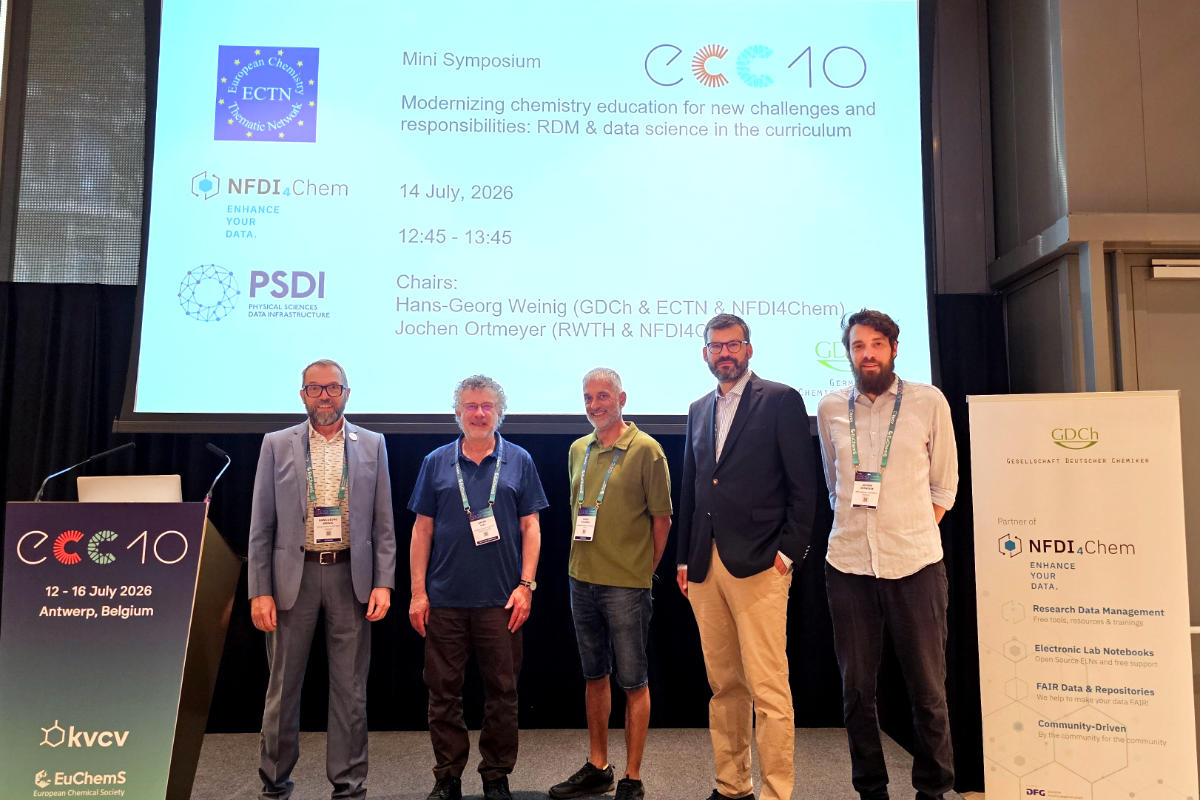
Digital literacy is becoming increasingly important in chemistry, as the discipline, like all natural sciences, is becoming ever more data-driven through digital measurement methods, analyses and forms of publication.
This development is now also being addressed at European level: the European Chemistry Thematic Network (ECTN), originally established to harmonise degree programmes as part of the Bologna Process, has put forward new recommendations for Bachelor chemistry at universities (see: https://doi.org/10.5281/zenodo.20642519).
Particularly noteworthy are the paragraphs on data literacy:
- Research Data Management (RDM) & Data Science: A dedicated section emphasises the fundamental importance of RDM for current research, referring to German initiatives such as the National Research Data Infrastructure (NFDI) and the Dutch SURF initiative.
- Digital Competence & Artificial Intelligence: This section defines additional key competences for working with research data and data-driven science – particularly against the backdrop of the rapid spread of artificial intelligence.
Although NFDI4Chem pursues a national mandate, this European perspective is of great value in an internationally networked scientific community. This was also reflected in a mini-symposium titled “Modernizing Chemistry Education: Research Data Management and Data Science in the Curriculum” at ECC10 (10th EuChemS Chemistry Congress), organized jointly by ECTN, NFDI4Chem, and the Physical Sciences Data Infrastructure (PSDI). The event brought together curriculum developers, infrastructure specialists, and university faculty to discuss how to better prepare undergraduate students for a data-intensive and digitally connected research environment. Building on the updated ECTN recommendations as well as the offerings from NFDI4Chem and PSDI, the symposium aimed to develop practical recommendations for modernizing chemistry curricula across Europe.